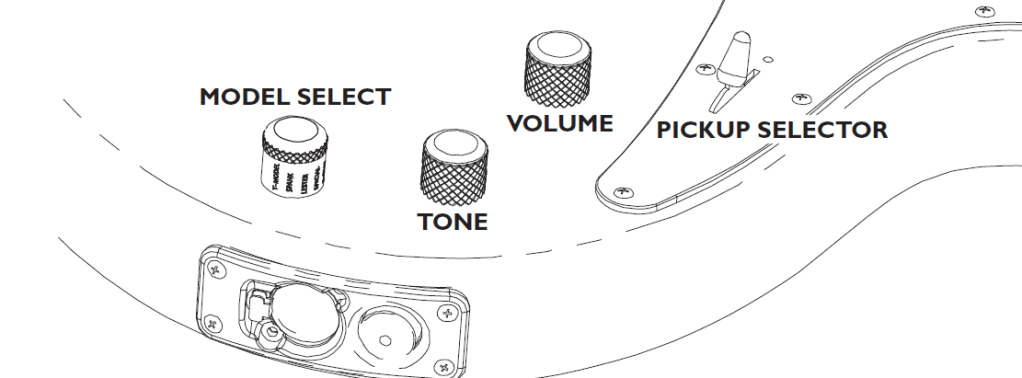
In 2003, the company Line 6 released a series of modeling guitars called Variax. It was a chameleon guitar that could change its color and tone at will. It can output a Fender Telecaster sound, a Fender Stratraster sound, a Gibson Les Paul Sound, and so forth, just by rotating one of the knobs called MODEL SELECT.
The company was later acquired by Yamaha. In 2015, it released its masterpiece, the Variax Standard, in collaboration with Yamaha, but unfortunately, it was also their last modeling guitar. So, what went wrong?
Variax Standardがヤバ過ぎて買ってはいけない理由
Recently, I obtained a Variax 500 in the second-hand marketplace to find out. Initially, it’s fun to play with. However, the change in the sound seemed subtler than I expected. I wondered why I felt that way.
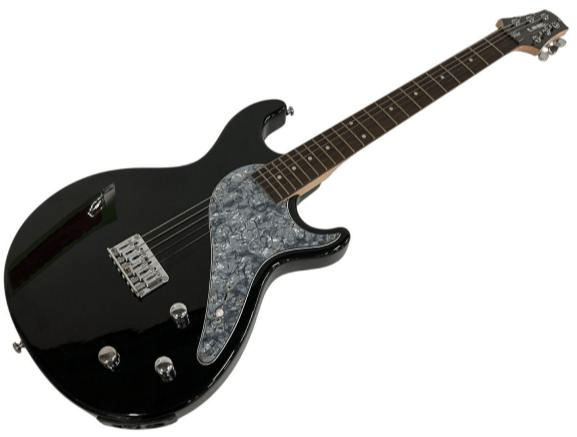
Line 6 Variax 500
Guitar Modeler
G
Soon, I figured it out. Although a modeling guitar could perfectly output the profiled sound of a 1959 Fender Stratocaster, the guitar player would never experience its looks, color, shapes, weight, etc., of the vintage guitar. All you felt was a plain, generic, unmemorable, and dull guitar. You can almost call it an “air guitar” or a faceless guitar. It would become a great CIA spy if we somehow needed to send a secret agent into the guitar world.
I concluded that people pay a huge sum of money for vintage guitars not only for the sound, but also for the experience. My Variax 500 can amazingly emulate or replicate the sounds of those famous vintage guitars, but that was not good enough. Even most people, including me, will never be able to pass the blind test on the sounds of Variax 500 vs. 1959 Fender Stratocaster. But that was not what people are looking for. You need to own the real musical instrument. Not a Chamereon guitar with no identity.
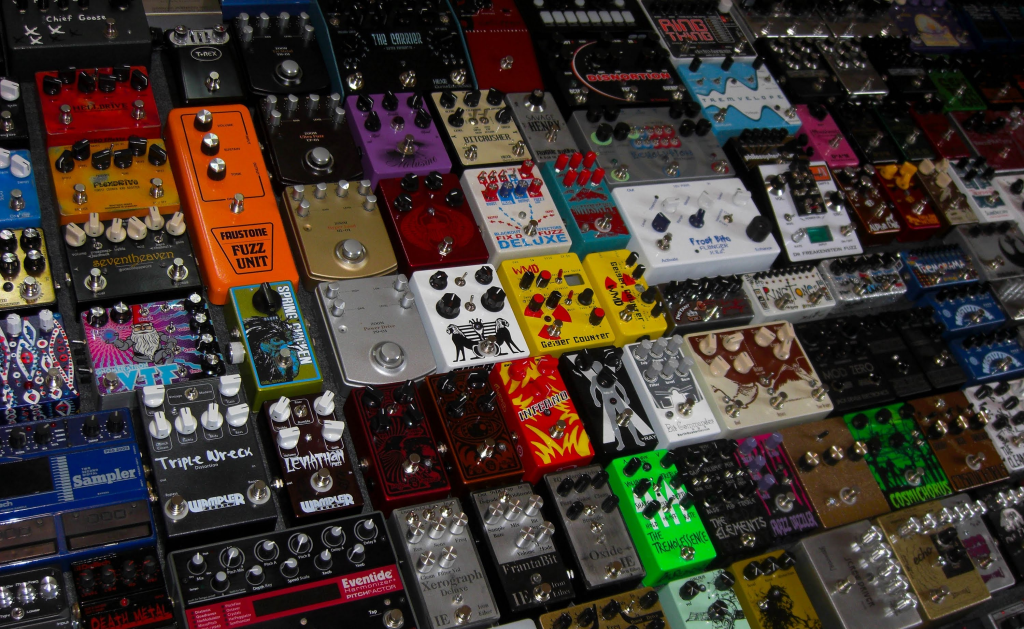
Amp modeling is a different game. Well, technically, it’s up to the person. For me, I don’t mind. I am okay with it. Because for me, amp modeling occurs after my interaction with my musical instrument, the electric guitar. I am not interested in the touch and feel of the amps and pedals. Thus, I am totally okay if my amps and pedals are all replaced by profiled, replicated presets (and custom sets if I were to create them) in an amp modeler, such as Zoom G2X Four.
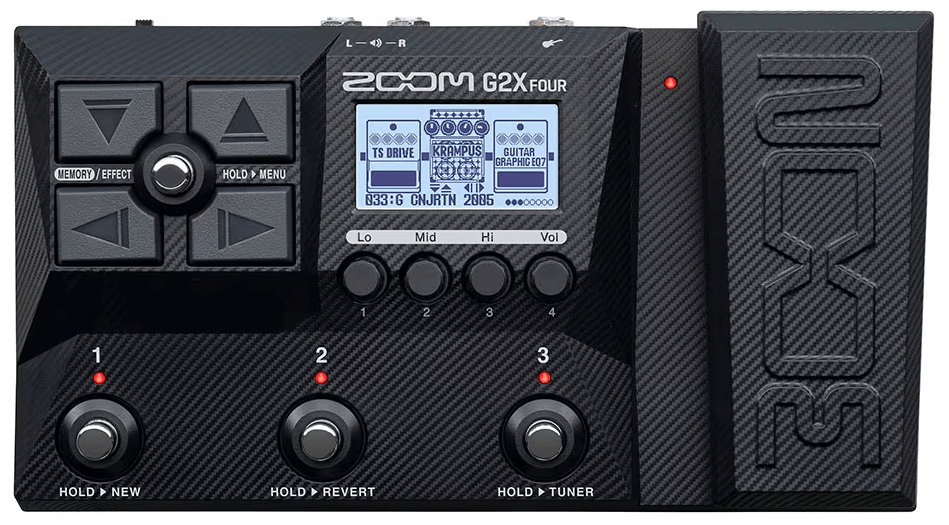
Zoom G2X Four
Amp Modeler
For those who disagree with me, I love you guys and totally respect your choices! Especially if you are professional musicians, it would make sense to use real amps and real pedals. Please remember that I am an amateur musician who doesn’t have the funds to purchase and a dedicated storage space for the real amps and pedals. Love and Peace!
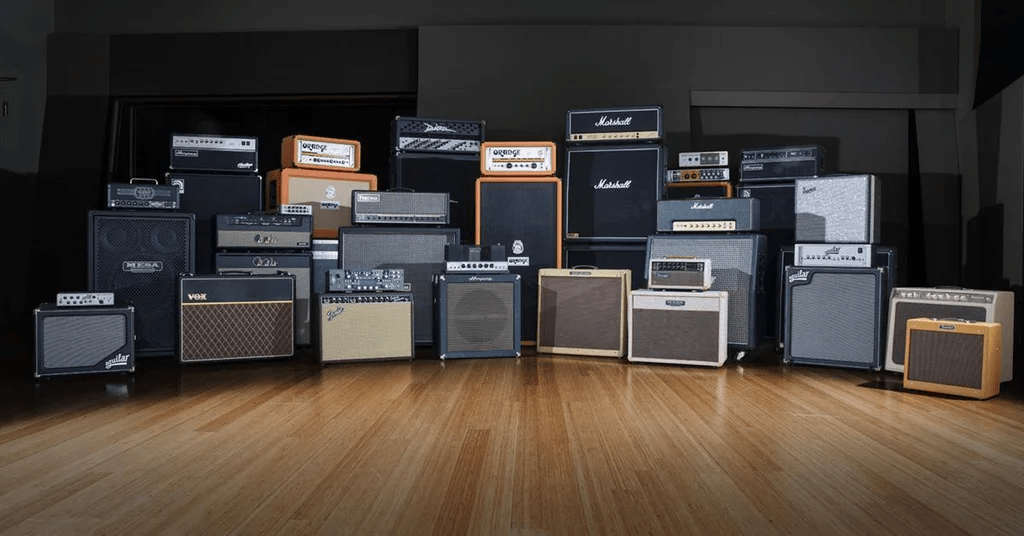
Amps
Pedals
PostScript (PS)
By the way, in 1989, I manually wrote a PostScript(R) code in the WordPerfect word processing application on a classic Apple Macintosh computer and output to a PostScript(R) compatible laser printer a random graphic for fun.
The comparison of Line 6 Variax 500 (2003) and Line6/Yamaha Variax Standard (2015)
| Line 6 Variax 500 (2003) | Line6/Yamaha Variax Standard (2015) | |
| Guitar Manufacturer | Line 6 | Yamaha |
| MODEL SELECT knob | T-MODEL, SPANK, LESTER, SPECIAL, R-BILLY, CHIME, SEMI, JAZZBOX, ACOUSTIC, RESO | T-MODEL, SPANK, LESTER, SPECIAL, R-BILLY, CHIME, SEMI, JAZZBOX, ACOUSTIC, RESO |
| Add-on Software | None | Variax Workbench HD — A free application that extends the modeling capability, such as the arbitrary locations of the pickup See the image below. |
| Pickups | Line 6 proprietary pickup on the back side of the bridge | Line 6 proprietary pickup on the back side of the bridge + 3 Yamaha single-coil pickups |
| Battery | 9 AA batteries | 9V battery |
| When Battery runs out | No Sound | Sound from 3 Yamaha single-coil pickups |
| Look and Feel | Faceless, Dull, “Air Guitar” | Yamaha Pacifica |
| Whammy Bar | None | Yes |
| ALTERNATE TUNING Knob | None | DROP D, 1/2 DOWN, DROP Db, 1 DOWN, DADGAD, OPEN D, BLUES G, RESO G, OPEN A, BARITONE See the image below. |
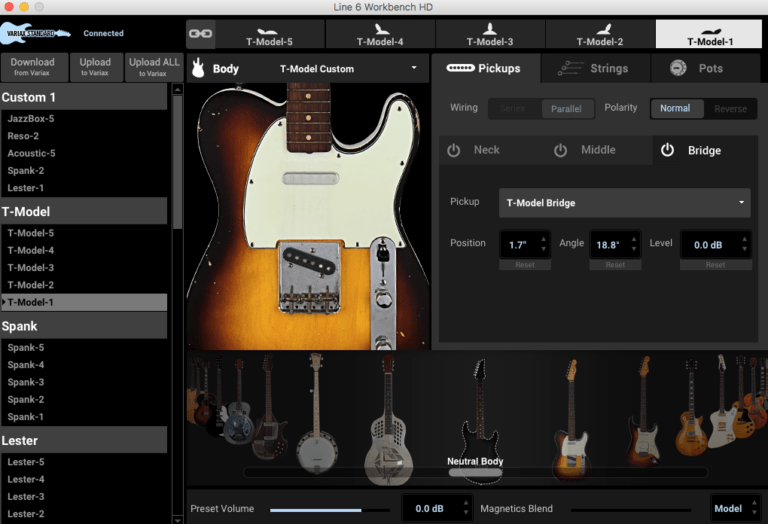
Line 6 Variax Workbench HD
(Application Software)
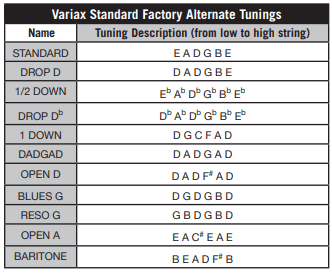
That Drop D Tuning, I just wanted to try it for fun!
 Taro's Blog
Leave a comment