Continued from MythBusters #2

Sorry son, it turned out that you were correct, I was wrong. The case was reopened and the verdict went to your favor.Please see the link below.
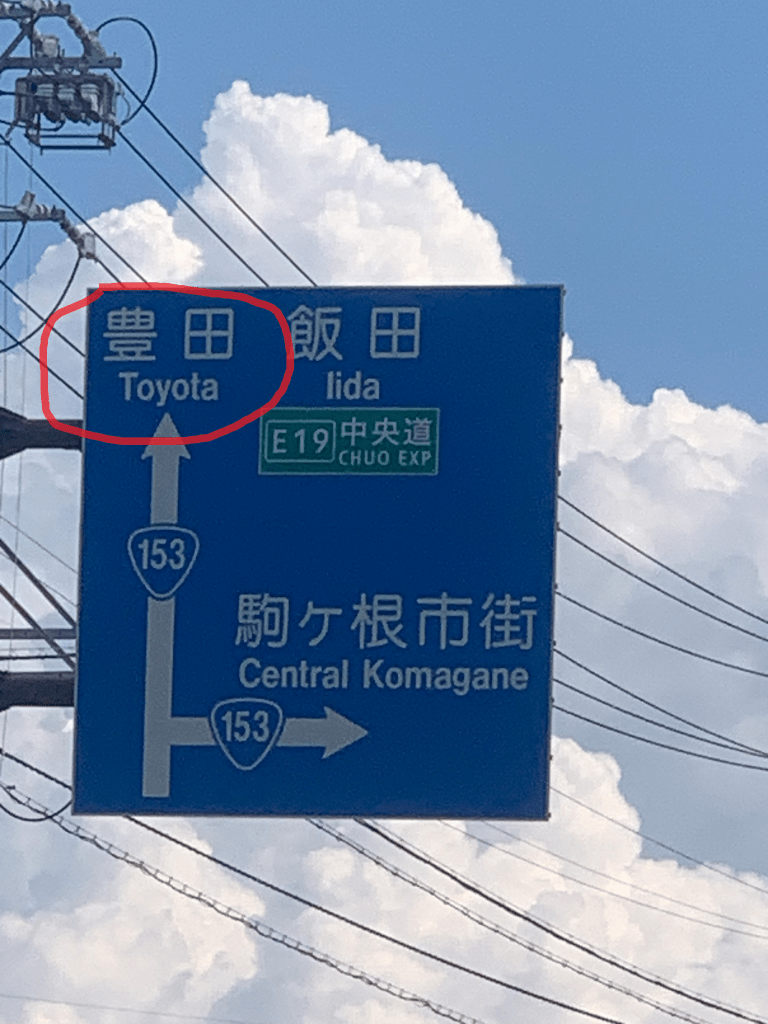
History of the Toyota Logo
Continued from MythBusters #2
Sorry son, it turned out that you were correct, I was wrong. The case was reopened and the verdict went to your favor.Please see the link below.
History of the Toyota Logo
One of my favorite books ever written by Dr Ken’ichi Omae is 「やりたいことは全部やれ!」 (“Whatever You Want to Do, Do Them All!”) In his book, he also stressed, “Whatever you want to do, do it now. Don’t wait”. This was one of the important books that changed my life. I’ve been following his advice truthfully.
Right now, I am learning to drive a bus, because I wanted to do it. In May 2025, I abandoned my permanent residency in Australia and came back to Japan because I wanted to do so, in addition to I thought it was good for my son’s education. I utilized my paid holidays and scuba dove when Qlik had the employee summits in Punta Cana, Dominican Republic, in January 2014 and Cancun, Mexico, in January 2015. I migrated to Australia in 2015 because I wanted to do so, in addition to I thought it was good for my son’s education. In April 2019, I drove to Uluru (aka Ayers Rock) via Coober Pedy and drove back through Alice Springs, Adelaide, the Great Ocean Road, and Eden with my son and then-wife in the duration of 2 weeks. We camped at every stop, and my son and I had a blast. When I had opportunities to take a couple of pleasure cruises, I grabbed them and went with my son, 2 weeks in December 2022 and a week in June 2023. In that aspect, I did pretty well.
Gene Simmons of KISS is a man I admire (Me, Inc.). Contrary to his public image (a money-hungry has-been rock star), he is an intellectual man with discipline. I wanted to raise my son like he did his children, but I was not able to do so due to the family situation back then.
In Japan, we quite often sugarcoat the name of organizations, and their facilities. We call our military 自衛隊 (Self-Defence Force). We call The Defeat of WWII 終戦 (The End of the War). We call Occupaiton (占領) Invasion (進駐), thus, we say something like 「戦後は、アメリカ進駐軍が7年間日本を平和的に統治しました。」”After the End of the War, the American Invasion Forces governed Japan peacefully for 7 years.” instead of ”After the Defeat of the WW II, the American Occupation Forces ruled Japan peacefully for 7 years.”
Make a long story short, my son decided to submit himself to 児童相談所 (Child Consultation Center), which actually meant Child Detention Center, for two weeks while I was away learning to drive a bus. I insisted that he would be OK living by himself, but in the end, I respected his decision with an unnoticeable smile. A day or two later, he regretted. He realised he had made a bad decision. He thought he would be staying in a single suite in the resort. Instead, he found himself in prison. For me, it was a blessing in disguise! He had learned some discipline that he lacked there, in my opinion.
Peter Frampton said, “I landed back at the bottom of the ladder. I quickly picked myself up. and started to fight my way back. I now believe that this was a necessity for me,” when he was accepting the Rock Hall Induction in 2024. Likewise, I wish my son would say, “That was a necessity for me” someday in the future.

Continued from This Is A Call
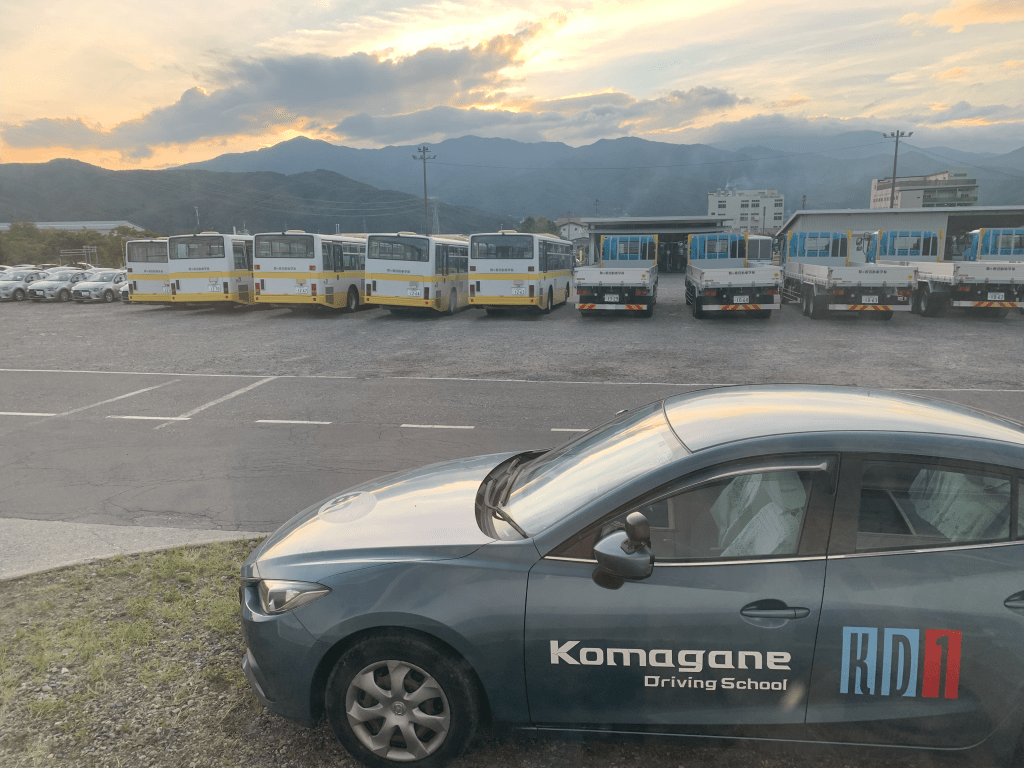
Yesterday, on Day 10, I finally received my provisional license for the Large-sized vehicles. That meant I was allowed to drive a bus on the public roads as a trainee with an instructor. Cool! I am on a path to complete the course on Day 16.
Driving a bus is, unfortunately, my dream job, but not my calling. It will be my new hobby. On a very boring Saturday, I would rent a bus and drive around a town with my son and a Jazz trio as the only passengers. Not a bad hobby. I can also be a volunteer bus driver in an emergency situation.
I was going to take over my father’s printing business in Tokyo. I went to RIT and got a BS degree in Printing and Applied Computer Science for that. Unfortunately, after a couple of years working for his company, both my father and I realized that we could not be business partners. Thus, I left
Somehow, the “Applied Computer Science” of my degree became handy, and I got a role in Denver, Colorado, for Quark Inc., the developer of QuarkXPress, the standard prepress application to layout pages for magazines in the 1990s.
To make a long story short, I’ve ended up being an IT guy across the United States, Taiwan, Japan, and Australia.
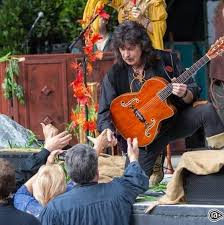
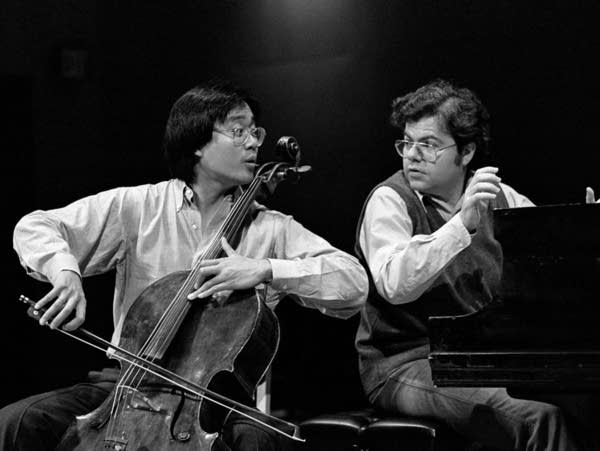
Although I pay full respect to our music giants like J.S. Bach, G.F. Handel, W.A. Mozart, Ludwig van Beethoven, Johannes Brahms, and others, I don’t consider them my heroes because they did not live at the same time as I. They were like a million light-years away. I think Heroes are people who live in the same generation. When I was a junior high school student, Brian May of Queen and Ritchie Blackmore of Rainbow were my music heroes. When I was a high school student, Mstislav Rostropovich and Yo-Yo Ma were my music heroes. (Seiji Ozawa and his mentor, late Hideo Saito, were also my heroes briefly when I was pretending to be a conductor. Seiji’s book「ボクの音楽武者修行」 taught me what he felt like when he went abroad alone in the late 1950s/early 1960s.)
Brian influenced me in my interests in guitar-making and astronomy, and Ritchie influenced me in my interest in baroque music. I loved the way Mstislav held his cello. It was so cool! I tried to emulate him, but I could not. For a long time, that was a mystery. Later, I found the reason. I mistakenly believed the Russian master was a tall man. I imagined his cello’s endpin was very, very, long. Later, I learned that he was a short man, thus he could hold his cello that way. Initially, I thought Yo-Yo was French (because he was born in Paris, France), but later I learned he was an American. Anyway, in the 1980s, there was no K-pop. Unlike a typical Asian stereotype of perfectionists, Yo-yo was not one of them. He was a risk-taker. Yo-Yo was the first Asian-looking young male music star that conquer the world!
ゴールデンボンバー (Golden Bomber) is a Japanese visual kei “air” rock band. I have no problem with them.

When I grew up in Japan and watched the Japanese bands on TV, I discovered that some frontmen/women were only pretending to play guitars. In other words, they could not play the instrument but were faking it. I felt betrayed.
On the contrary, frontmen/women of the US/British bands actually play guitars. And they play very well. Billy Corgan of the Smashing Pumpkins, Robin Zander of Cheap Trick are excellent guitarists. Not to mention the King of Rock and Roll, Kurt Cobain of Nirvana, Dave Grohl of Foo Fighters, Rivers Cuomo of Weezer, and Emily Armstrong of Linkin Park (former Dead Sera frontwoman), humble Mick Jagger, and Freddie Mercury both said they could not play guitars, actually played their guitars like pros (well, they were pros after all). Like Freddie, Mick could also play keyboard!
I asked Chat GPT why so? Here is the answer.
Some Japanese bands’ frontmen/women may pretend to play guitars for stage visual effects and audience engagement. When their sound is turned off or not audible, it can be due to technical issues, sound engineering choices, or artistic decisions. Sometimes, performers focus on visual performance and interaction rather than actual playing, creating a dramatic or stylized show. This approach can enhance the entertainment value and emphasize the performative aspect even if the actual instrument sound isn’t heard.
What a sugar-coated bull sxxt! Again, I felt betrayed by AI.

Although I like the song by Queen, I am talking about an article that my father wrote in the newsletter for a local industrial group here. Unfortunately, I did not keep the publication, and I don’t remember what he wrote to me. All I remembered was that I did not agree with what he wrote.
I suppose that it is the normal father-to-son relationship. Today, I telephoned my father, who is 93 years old, and he only told me to “Taro, take care of yourself. Do what you want to do.” I replied to him, “Dad, you do the same”. We grew up over the years, and our relationship improved.
Son, please try to listen to me. You’ve been closing your ears. I want you to think I am still cool. I love you, I’d love you to love me. I tried to be honest and open, but somehow, our communications had been lost in translation. To soothe my broken heart, I could only sing out loud. You are not ready yet. You have to break the bad habit. I know because I’ve been through the path you are going now. You have to be comfortable with yourself. You can only work hard and do the right things. You will never know where you are ending up. Regarding our relationship, we can work it out. You are still half child and half adult.
Once you become an adult, both legally and practically, and can take full responsibility for your actions, you can start your own show. I will say, “Son, take care of yourself. You can go your own way. Don’t worry about what I or others think. You are a good boy!”
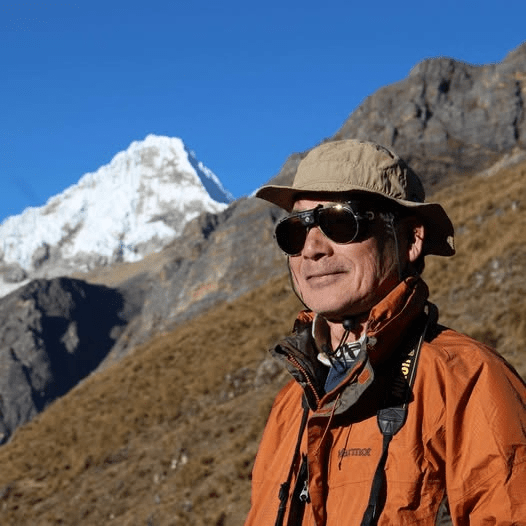
Teacher Jun’ichi Yoshinaga (吉永順一) was my hero when I was at Tokyo Metropolitan Chitose High School (東京都立千歳高等学校). He taught geoscience and was the Club Advisor for the Mountaineering Club. I regret I did not join his Mountaineering Club. (I joined the Chamber Music Club.) I wish he were my homeroom teacher.
In the Geoscience class, he showed us the photo slides of his geoscience-related museums and the fields as part of the lesson. That was the first time I was exposed to the real people and the scenery of the United States. I suppose he also climbed some mountains. He travelled solo or in a small group. He could speak practical English. He said he would grow his mustache to look older when he was traveling abroad.
When I participated in the Ski Camp organized by the high school, he was an excellent ski instructor. Mr. Yoshinaga and I chat after dinner at Sengakuso (千岳荘), a hostel in Fukushima that was owned by the Tokyo Metropolitan government, and exclusively used by the students of Chitose High School. I had a blast.
When I saw him on the NHK Geoscience class for High schoolers a decade ago, he didn’t age at all. I envied him. I just found that he wrote some books. It’s now on my books-to-read list.
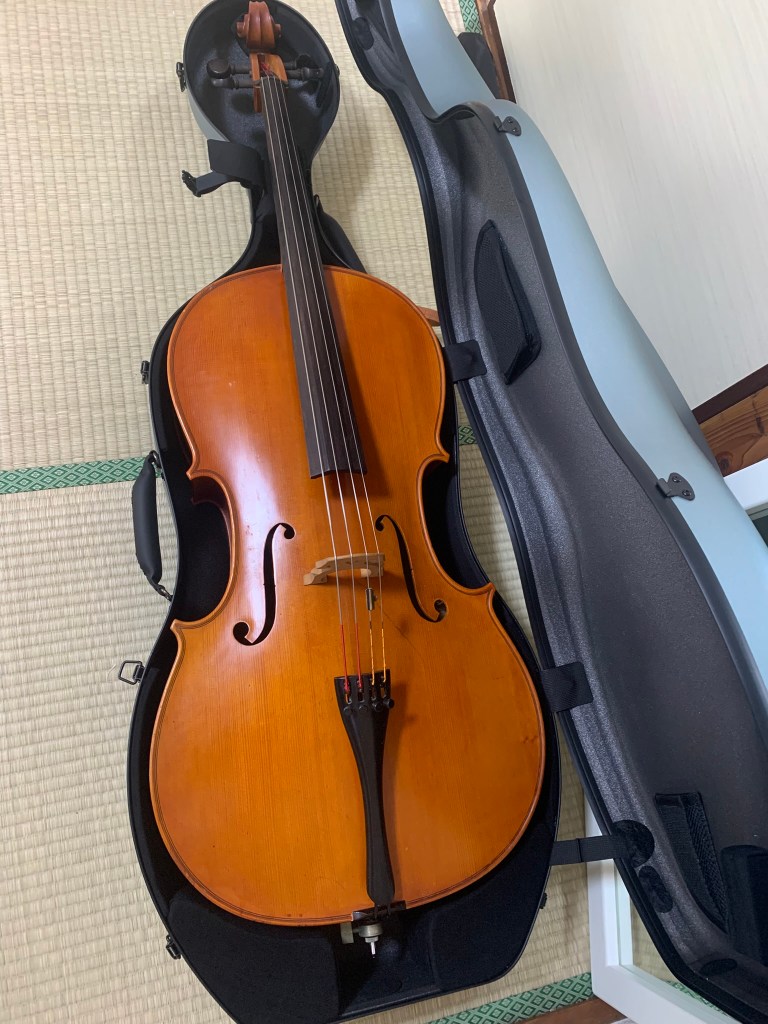
Currently, I am partnering with my second cello, which I met in 2002 in Taipei. In 2004, she traveled from Taipei to Tokyo with me. In 2015, she traveled from Tokyo to Sydney with me. In 2025, she traveled back from Sydney to Tokyo with me.
In 2001, I briefly dated the Yamaha SVC50 Silent Cello. Unfortunately, we did not get along.
In 1982, I fell in love with my first cello when I was attending high school in Tokyo. In 1988, she traveled from Japan to the United States with me. In 1992, she traveled back from the United States to Japan with me. In 1994, she traveled back to the United States from Japan with me. In 2000, she decided to stay in the United States, and I respected her decision when I left the country.
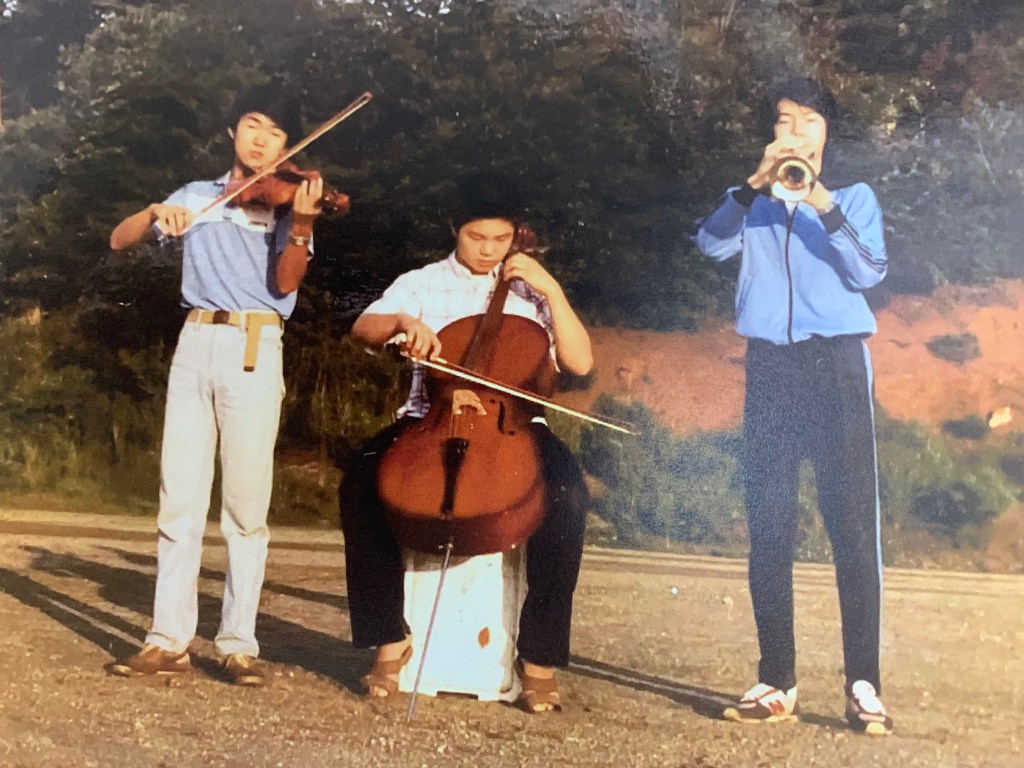

I just found it. Current AI acts like my 14-year-old ASD boy.
He would never say what he wants to do. I have to ask him what he wants, and then he says yes or no. If the answer is no, I repeat the process until I get a “Yes.” He is smarter than I. He is stronger than I. He is good at mimicking images, video, or music. He knows everything and talks with confidence as an authority or expert. Most of the time, he is correct, but he misses one in a while. He still insists he is correct. No apologies.
He does not keep his promise. He says he is going to do this and that, but most of the time he forgets. So I get frustrated. Unlike his intelligence, his room is very messy. I suppose the current learning model of AI is very similar. AI always comes up with some answer with confidence, but we are not sure that it’s correct. Maybe he is correct 80%, and 20% is BS. I want him to continue to learn and become successful in the future, but he does not listen to me.
He always asks me when I ask him to do something. “Why do I have to do that? Please explain. If your explanation is not logical, I won’t be convinced. Thus, I won’t do anything for you”.
I am surprised that a respected organization like Transport for NSW gives full responsibility for its customer service to AI like him. Before laying off humans and replacing them with AI, the customer service by Transport for NSW was exceptional. I truly respected their customer service staff and appreciated their service. Sadly, they have all been laid off or relocated. Now, I look down at their customer service run by AI, which acts like my rebellious teenage boy.
70% of Consumers Would Switch Brands After One Bad AI Experience, Study Says
Why AI Customer Service Is Bad and What Lies Ahead
Patience is running out on AI customer service: One bad AI experience will drive customers away, say 7 in 10 surveyed consumers
 Taro's Blog
