Google Images finally taught me how to read this.
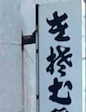
The text written on the signboard in the selected region is "Kisoba" (生楚者), written using historical cursive characters known as hentaigana.In modern Japanese hiragana, it is spelled きそば (kisoba), which literally means "pure/fresh buckwheat noodles." It is a traditional expression commonly found on signboards and curtains (noren) at authentic soba restaurants.Breakdown of the Characters• 生 (Ki): Means "pure," "raw," or "fresh," signifying high-quality soba made without unnecessary additives.• 楚 (So): A historical character (kanji) used as the base origin for the modern hiragana "そ" (so).• 者 (Ba): A historical character used here as the hiragana "は" (ha). With a voiced marker (dakuten), it is read as "ば" (ba).Because the character for "ba" (者) looks very similar to the modern hiragana "む" (mu), it is frequently misread by modern readers as "kisomu."


Leave a Reply